
Worktop Fitting In Doncaster
Free Consultation
01302-490-277
Choosing a new worktop usually comes down to two separate questions: which material actually suits how the kitchen gets used day to day, and who is doing the templating and fitting once that decision is made. We handle both as one job - granite, marble, quartz, solid surface and laminate all go through the same free home consultation, laser templating and fitting process, so the material you pick changes what you're paying for and how it's cared for, not how carefully the job is measured and installed.
If you've already settled on a stone, our Minerva and granite worktop specialists can go into more fitting detail for that specific material. This page is the better starting point if you're still weighing granite against quartz, wondering whether a solid surface like Corian would suit an island better, or checking whether laminate would do the job just as well for a lower material cost.
That single point of contact carries past the worktop itself. If templating turns up a base cabinet that needs reinforcing before a heavier stone top goes on, or a tap position that needs moving, it's the same crew who sort it rather than a second contractor being brought in and a second visit being booked. That matters more on a worktop job than most, because the visit where the problem is spotted - the free consultation or the templating appointment - is also the visit where fixing it can be scheduled in.
Granite, Quartz, Solid Surface Or Laminate: What Every Worktop Fit Includes
- A free home consultation and measuring visit to look at your kitchen and discuss material options
- Laser and template measuring for granite, marble, quartz, solid surface and laminate worktops
- Cutting, edge profiling and polishing, including pencil round, bullnose, bevelled, ogee and waterfall edges
- Sink, tap and hob cut-outs sized to your chosen appliances
- Matching splashbacks and upstands in stone, glass or laminate
- Removal and disposal of your old worktops under our own registered waste carrier licence
- Fitting and levelling the new worktop onto your existing or reinforced cabinets
Not Included / Costed Separately
- Reinforcing or replacing worn or unlevel base cabinets - priced separately once we've assessed them on site
- Reconnecting plumbing to sinks, taps and dishwashers - carried out by our NVQ Level 2 and City & Guilds trained plumbers as a separate item if it isn't already part of a full kitchen fit
- Reconnecting gas hobs or range cookers - by law this can only be commissioned by a Gas Safe registered engineer, so it's quoted and scheduled separately
- New under-counter sockets or lighting - this needs a Part P approved electrician and is scoped as additional electrical work
The Same Six-Stage Process, Whatever Material You Choose
- Free consultation -- A visit to your home to look at the existing kitchen, talk through granite, quartz, solid surface or laminate options, and leave you with a written quotation before anything is booked, including a look at whether your existing base cabinets will take the material you're leaning toward.
- Appliance check -- Where new appliances are going in, we ask for them on site (or the model numbers) before templating, so cut-outs and clearances are right first time - a hob or sink swapped for a different model after templating usually means a return visit to re-measure.
- Laser templating -- A template of the worktop, usually one to two hours, capturing every run, corner and cut-out to millimetre accuracy, checked against the appliance details agreed at the consultation before it's sent to fabrication.
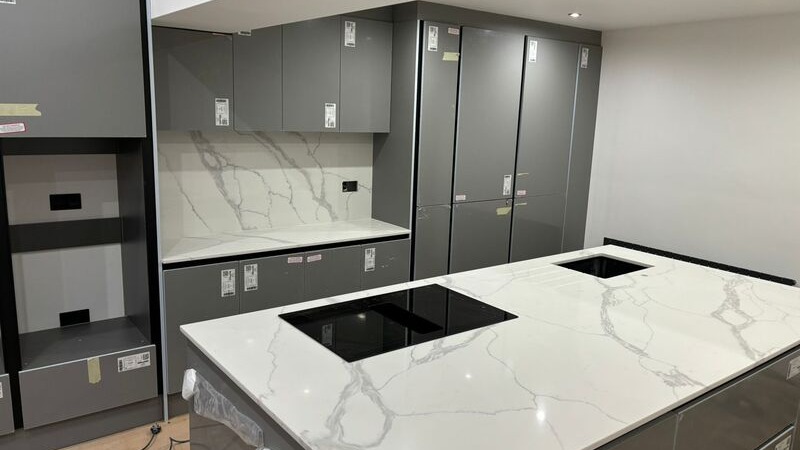
- Fabrication -- Cutting, edge profiling and polishing off-site, typically five to seven working days depending on the material and how many joins or cut-outs are needed, with the profiling and polishing finished by hand once the main cuts are made.
- Removal and fitting -- Old worktops are stripped out and taken away under our registered waste carrier licence, then the new worktop is fitted and levelled - usually four to six hours for a standard kitchen, with plumbing reconnection scheduled separately if it isn't already part of a full kitchen fit.
- Sign-off -- A final check with you, care instructions for the material fitted, your labour and installation guarantee paperwork, and a note of who to contact if anything needs adjusting once the worktop has settled in.
How Edge Profile And Thickness Change What You Pay
Edge profile and slab thickness move the price before the choice of material even gets factored in. A simple pencil round or bullnose edge is the fastest profile to cut and polish, while a bevelled or ogee edge takes longer at the polishing stage, and a mitred waterfall edge - because it needs two pieces joined and finished so the seam disappears - adds fabrication time beyond a straight run with a single edge profile. Thickness compounds that: a 30mm slab holds a deeper profile and costs more in raw material than a 20mm slab of the same stone, so two granite quotes for the same footprint can differ once one specifies a 30mm waterfall island end and the other a 20mm pencil-round run.
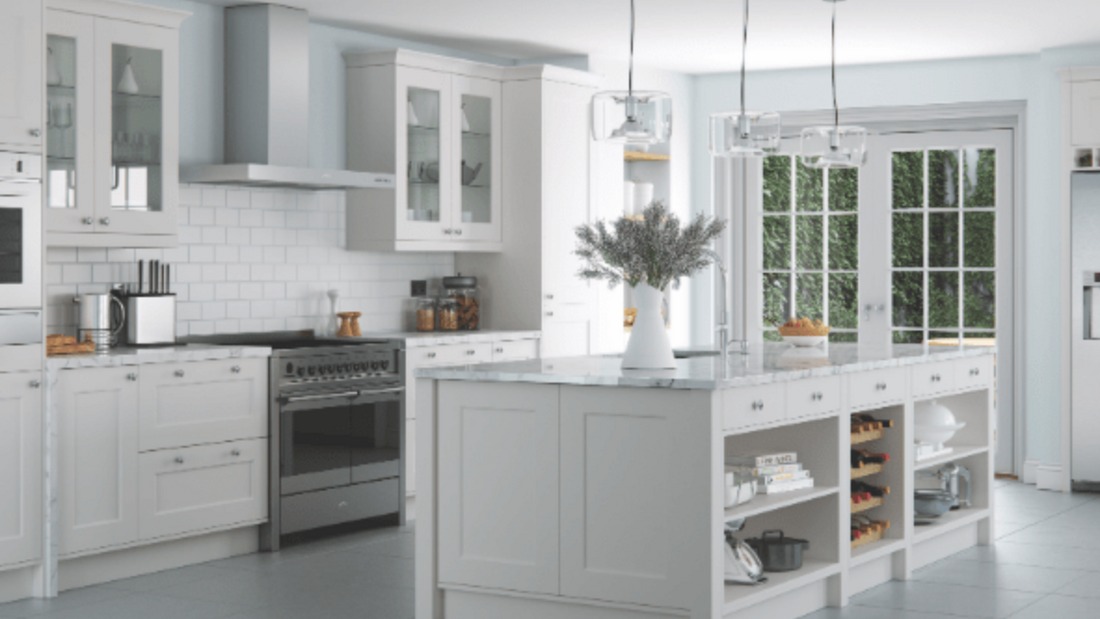
Material comes next in what moves the number: laminate is the most affordable option, granite and quartz sit in the mid-to-premium range, and natural marble or a bespoke solid surface with integrated sinks or a waterfall edge tends to cost the most. The number of runs and joins, how many cut-outs are needed for sinks and hobs, and whether the existing cabinets need reinforcing to carry a heavier stone top all add to the fabrication time and the final price on top of the profile and thickness decisions made at the consultation. Because every kitchen is a different shape, every material is priced differently by the slab, and edge profile and thickness change the fabrication time independently of both, we don't work from a fixed price list - the free home consultation is where we measure your kitchen, talk through material and edge options against your budget, and give you a written quotation, so you know the full cost before anything is booked. Two kitchens with the same footprint and the same material can still end up on different quotes because one specifies a heavier profile at a greater thickness, or because the base cabinets underneath aren't in the same condition - a run of worktop over cabinets that are already level and sound costs less to fit than the same run over units that need shimming, refixing or partially rebuilding before a heavier material can sit on them safely. That's one of the reasons the written quotation follows the site visit rather than being given over the phone: a granite or quartz slab weighs enough, and an edge profile locks in early enough, that getting either wrong isn't something to guess at from a room measurement alone.
Granite, Quartz, Solid Surface And Laminate Side By Side
| Material | Look | Heat & scratch resistance | Day-to-day care | If it gets damaged |
|---|---|---|---|---|
| Granite | Natural stone, every slab unique | Very good heat resistance; needs periodic resealing | Wipe clean once sealed | Small chips can often be filled; larger cracks may need a section replaced |
| Quartz | Engineered stone, around 90-95% natural quartz with a consistent pattern | Resists heat, scratches and stains | No sealing needed, wipe clean | Minor marks can sometimes be improved; significant damage usually needs a panel replaced |
| Solid surface (e.g. Corian) | Thermoformed and joined seamlessly, integrated sinks possible | Less heat-tolerant than stone - use a trivet for hot pans | Non-porous, easy to keep clean | Scratches and burns can often be sanded and polished out on site |
| Laminate | Wide range of stone and wood-effect finishes | Least heat and scratch resistant of the four | Wipe clean | Not repairable if damaged - the affected section needs replacing |
Why The Edge Profile Depends On The Material, Not Just The Look
Whichever material ends up on your worktop, getting the edge profile right is as much a part of the templating visit as the sink cut-out. Pencil round and bullnose keep corners softened and safe, which suits a busy family kitchen where a hip catches the edge more often than anyone would like; a bevelled or ogee edge reads more traditional and sits better against period cabinetry with raised-panel doors; a waterfall edge runs the material straight down the end panel of an island so it reads as one continuous piece rather than a slab balanced on a box end. Which of those a given material can actually deliver comes down to thickness as much as looks.
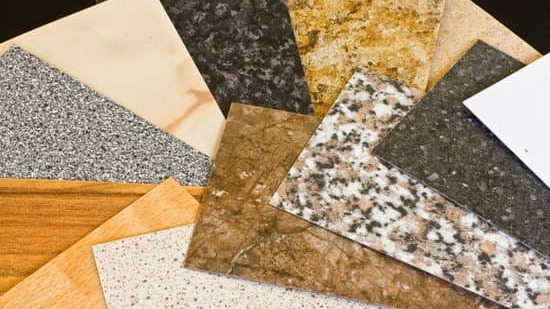
A thinner laminate or a slimmer solid surface panel won't hold a deep ogee the way a 30mm granite or quartz slab will, and a waterfall edge needs enough material thickness at the mitred corner to avoid a visible seam once it's polished - which is why some combinations of material and profile that look fine on a sample board don't translate cleanly onto a full-size island end. That thickness-and-profile match gets talked through at the free consultation and is confirmed again once the exact slab or panel has been chosen, before the template is cut rather than after fabrication is already under way. Getting it right first time matters more here than on most kitchen elements, because an edge profile isn't something that gets revisited once cutting and polishing are finished - a laminate run can be swapped out relatively cheaply if a choice turns out wrong, but a mis-matched stone or solid surface edge means refabricating the whole run from a fresh template. None of that gets locked in from a phone call or a photo. A slab or panel that measures 20mm can look identical to one that's 30mm in a sample swatch, and the difference only becomes obvious once someone is stood in the kitchen with the actual units, deciding whether an ogee edge will hold its shape at that thickness or whether a simpler pencil round is the safer call for the same material.
Getting A Finished Worktop Into Homes Across Doncaster And South Yorkshire
Getting a stone slab through a front door is a different logistics problem to getting a rolled laminate sheet up a staircase, and because this page covers everything from granite to laminate, the access conversation at the free consultation changes depending on which material you're leaning toward rather than which side of Doncaster or Rotherham you happen to be on. A 30mm granite or quartz slab typically needs two people to carry it flat, a clear turning point near the front door, and a route through the property wide enough that it doesn't need to go round a tight stair turn - so a narrow hallway, a flat above ground level, or a kitchen at the back of a long corridor all get flagged and measured at the consultation visit rather than discovered on fitting day.
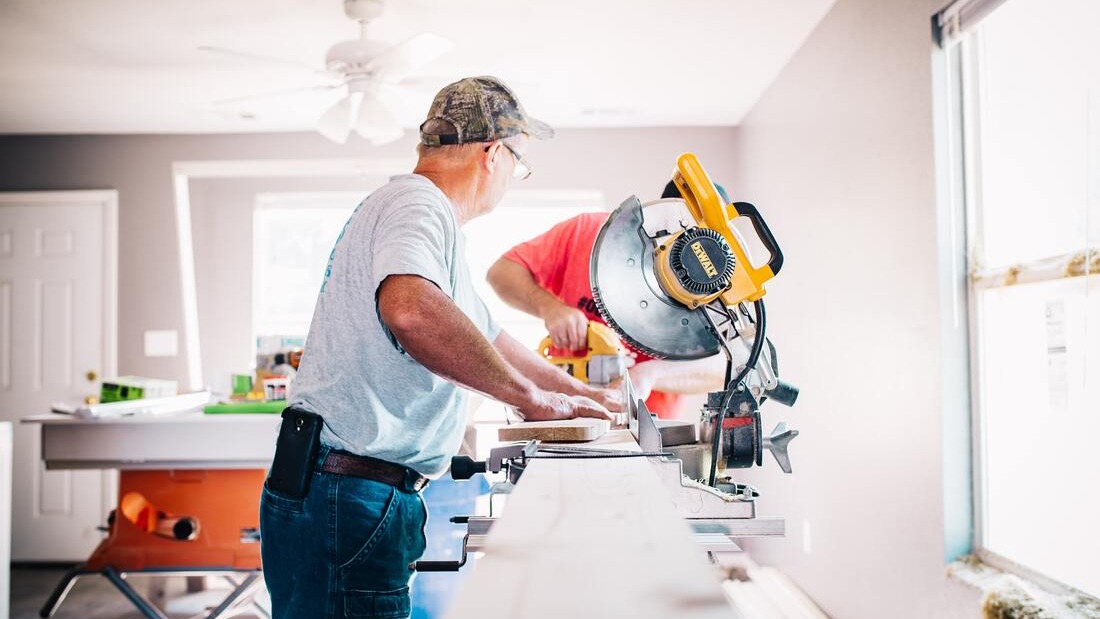
Laminate and thinner solid surface panels are lighter and more forgiving of an awkward route, which is one of the reasons it can still be the realistic option for a property where a full stone slab would mean removing a door or a stair spindle just to get it into the room. Parking is the other half of the access picture: a templating visit needs the van close enough to run the laser equipment out to the kitchen, and a fitting day for a heavier material needs a longer, uninterrupted loading window than a laminate swap does, so on-street parking, permit zones and any residents' parking scheme are worth flagging when the consultation is booked rather than left until the fitting team turns up on the day. Coverage runs across Doncaster and out to Rotherham, where the business is registered on Avondale Road, and the wider South Yorkshire area around both - the same team and the same access-first approach apply wherever the job is. Because a fabricated slab is delivered finished and can't be trimmed down on site the way a laminate sheet sometimes can, the exact route in - door widths, stairwells, parking - gets confirmed against the material actually chosen before the fitting day itself is booked, rather than left as a general assumption about what the property can take.
Worktop Fitting Questions We Get Asked In Doncaster
Which worktop material is right for my kitchen?
It depends on how the kitchen gets used more than anything else. Quartz and granite cope best with heat and scratches and suit a kitchen that gets heavy daily use; solid surface is easy to keep clean and can take an integrated sink or a seamless waterfall edge; laminate gives you the widest range of stone and wood-effect finishes for the lowest cost but is the least forgiving if it's scratched or scorched. We talk through the trade-offs against your budget at the free consultation rather than pushing one material as the default. A quick way to narrow it down: think about how the worktop next to the hob and sink actually gets treated day to day, since that's the area most likely to show heat marks, scratches or water staining first, whichever material ends up either side of it.
Can I mix worktop materials in the same kitchen, such as quartz on the main run and a wood or laminate breakfast bar?
Yes, this is fairly common, particularly on an island or breakfast bar where the surface is used differently to the main run - a laminate or timber-effect panel on a seating area next to a quartz or granite run around the sink and hob is one combination we're regularly asked to template and fit. Each material still goes through its own cutting and polishing process, so it's priced and scheduled as two separate elements even though the templating visit and fitting day are usually done together.
Can you just replace my worktop, or does it have to be part of a full kitchen refit?
A worktop can be fitted as a standalone job. The one thing that can turn it into a bigger job is the state of your base cabinets - if they're worn, unlevel or not built to carry a heavier stone top, they need reinforcing or replacing first, and that's priced separately once we've had a look on site.
How long does the whole process take from measuring to fitting?
Templating itself is usually one to two hours. Fabrication - the cutting, edge profiling and polishing - typically takes five to seven working days depending on the material and how many joins or cut-outs are involved. Fitting and levelling the finished worktop is usually four to six hours for a standard kitchen.
Do you disconnect and reconnect my sink, tap and hob?
Sink and tap plumbing is handled by our NVQ Level 2 and City & Guilds trained plumbers, but it's a separate item unless it's already part of a full kitchen fit. Gas hobs and range cookers can only be reconnected and commissioned by a Gas Safe registered engineer by law, so that's always quoted and scheduled separately too.
What happens to my old worktop?
It's stripped out and taken away as part of the job, disposed of under our own registered waste carrier licence, so you don't need to arrange separate removal.
Can I have a waterfall edge or a specific edge profile on any material?
Most edge profiles, including waterfall edges on an island, can be done on stone, solid surface and some laminates, but what a given material can actually deliver depends on its thickness and how well it takes a polished edge. That's confirmed at the free consultation and locked in before the template is cut, not decided afterwards.
What's the cheapest worktop option and what costs the most?
Laminate is the most affordable material we fit. Granite and quartz sit in the mid-to-premium range. Natural marble and bespoke solid surface with integrated sinks or a waterfall edge tend to cost the most. A full price always needs a site visit, since the size and shape of your kitchen affects the number of joins and cut-outs as much as the material does. If budget is tight but you still want the look of stone, a mid-range quartz or a stone-effect laminate are usually the two options worth comparing side by side, since both can get close to a similar appearance for a different price point.
Is finance available for a worktop installation?
Yes, finance options are available - this can be discussed at the free consultation alongside your written quotation.
What guarantee comes with a new worktop?
Every job carries a 5-year labour and installation guarantee, plus a 2-year guarantee on the worktop itself.
Start With A Free Consultation So Fabrication Can Begin Sooner
Every worktop job starts with a free, no-obligation home visit where we measure up, talk through granite, quartz, solid surface and laminate against your budget, and leave you with a written quotation rather than a verbal estimate. Because fabrication typically takes five to seven working days once a template is taken, booking that first visit sooner is what keeps a new worktop from being the one thing still waiting to be finished on an otherwise completed kitchen. If you're not sure which material fits your kitchen yet, that's exactly what the consultation is for - bring rough ideas rather than a firm decision, and we'll work through granite, quartz, solid surface and laminate against how the room actually gets used before anything goes on the quotation. Get in touch to arrange a date.
Premium Kitchens of Doncaster
Call 01302-490-277

Get in Touch
Premium Kitchens of Doncaster
📞 01302-490-277
✉️ info@kitchensindoncaster.co.uk
5-Year Guarantee • Free Quotes • Old worktops cleared
Quick Free Estimate - No Obligation
Fully Insured • Response within 15 mins
🔒 Your details are safe with us. No spam, ever.